Kitchens
Kitchen Inspiration
The Need:
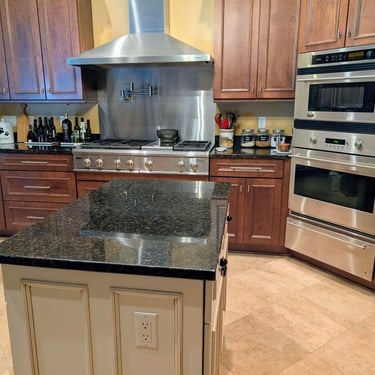
Maximize efficiency in a large kitchen used daily for cooking, baking, and meal preparation. All items were evaluated at the outset to identify redundancies and understand how the family moves through the space. The central island serves as the primary work surface, while the surrounding counters and extensive cabinetry make it essential to determine what should remain accessible and what can be stored away to support clear surfaces, intuitive workflow, and easy daily maintenance.
The Solution:
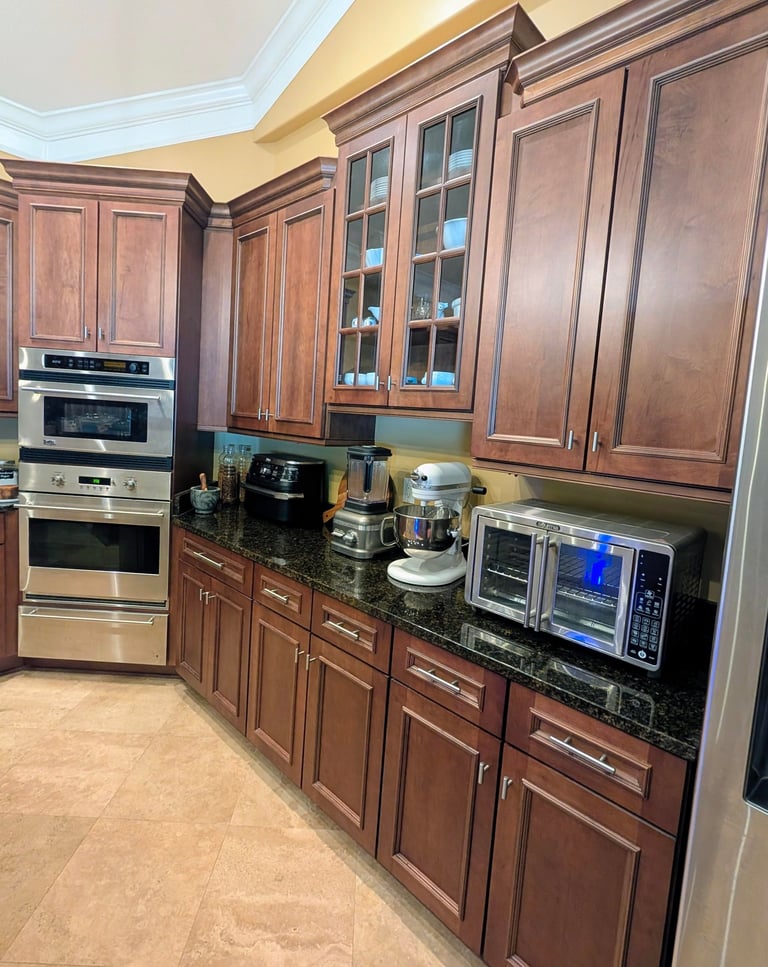
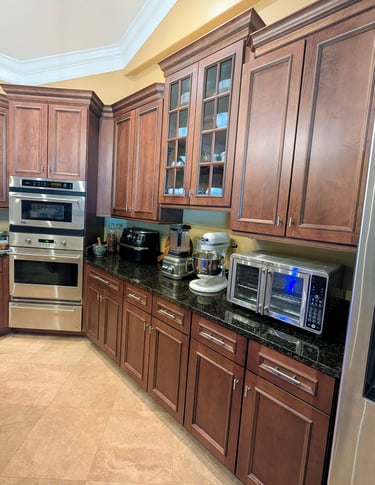
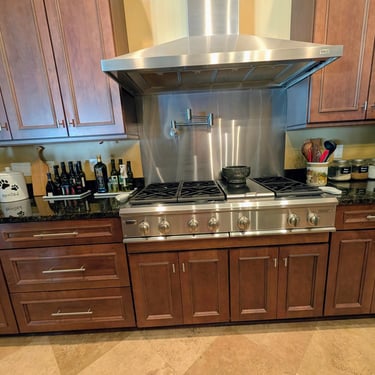
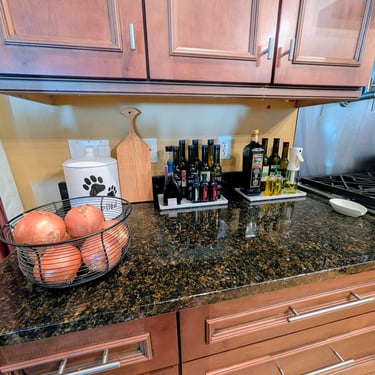
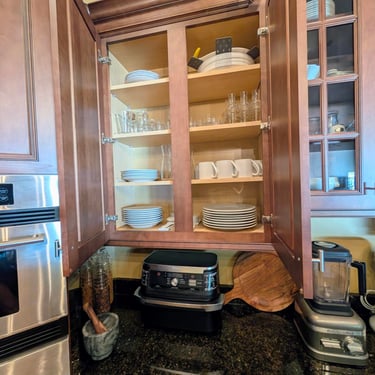
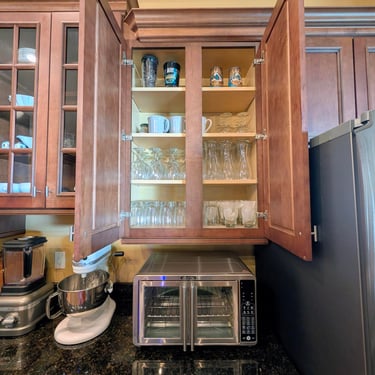
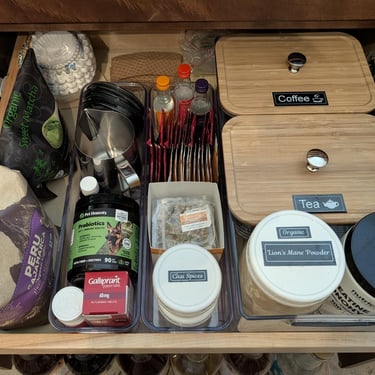
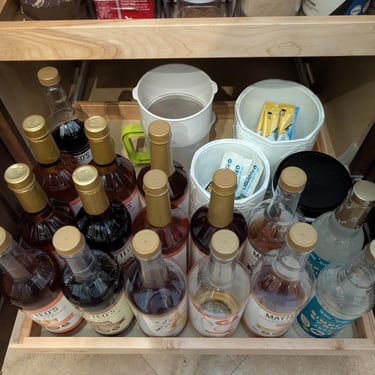
The first step was determining what should remain on the counters based on frequency of use. The central island serves as the primary work surface, so it was kept clear for prep, baking, and assembling meals. Weekly‑use appliances such as the air fryer, toaster oven, KitchenAid mixer, pressure cooker, and blender were placed on the surrounding counters where outlets are accessible and where the family naturally uses them. A dedicated coffee station was created on one counter, and oils and vinegars were placed on trays near the 48‑inch range to support daily cooking.
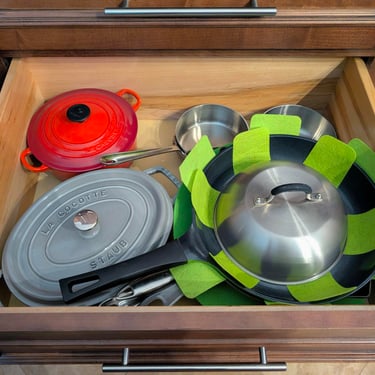
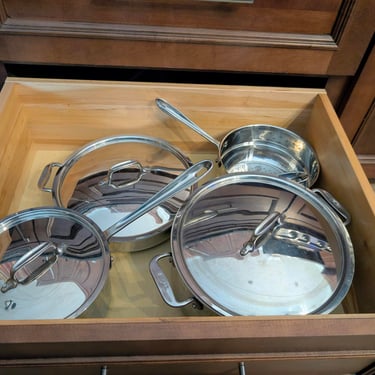
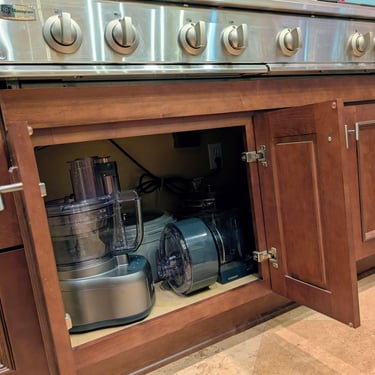
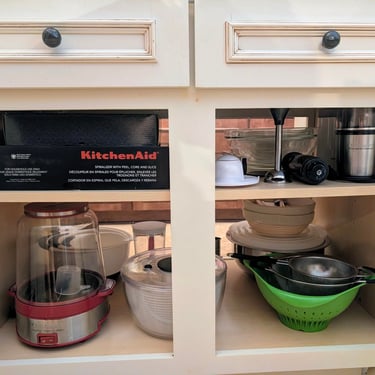
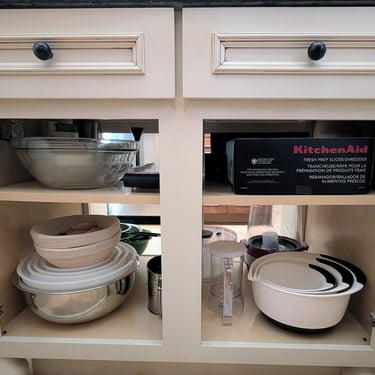
The deep drawers next to the 48‑inch gas range were used to store all stainless, non‑stick, and ceramic cookware, keeping pots and pans beside the primary cooking zone. Large pots and appliances not used daily were placed in the deep cabinets below the range for easy access without crowding the surrounding counters. The raised bartop, which offers additional depth, supports daily routines while keeping the island clear as the main work surface.
Onions were placed in an open basket on the counter near the cooktop. Fruit was stored in open baskets on the raised bartop, positioned at opposite corners above the sink to prevent off‑gassing from affecting nearby produce and to maintain clear access to the island and surrounding counters.
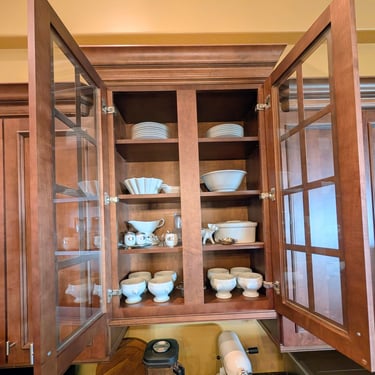
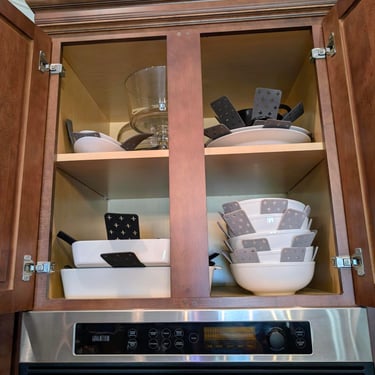
The client’s Apilco serving pieces were moved from one of the cabinets to the open glass‑front cabinet, giving these well‑loved pieces a dedicated place to be seen and easily accessed for gatherings.
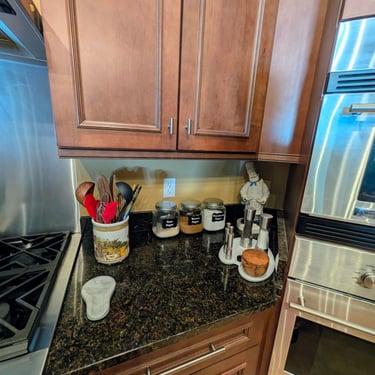
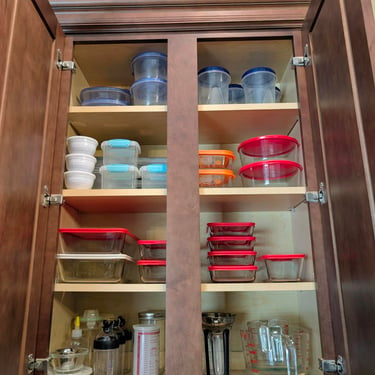
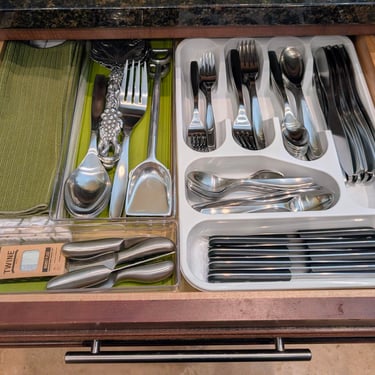
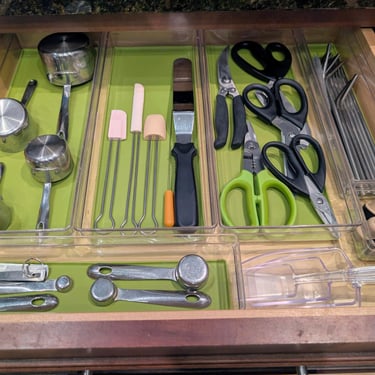
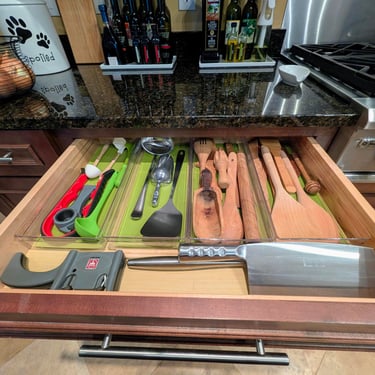
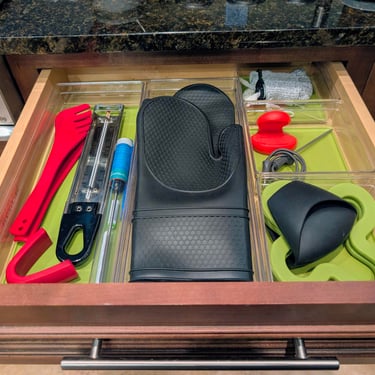
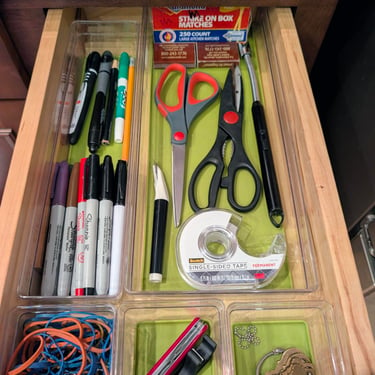
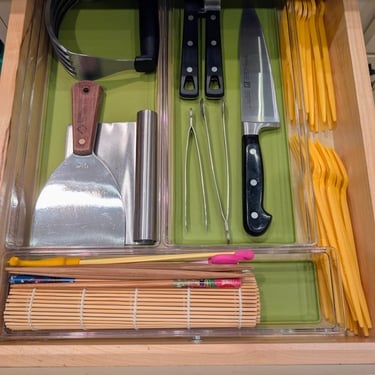
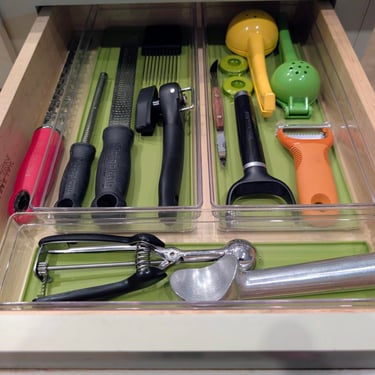
Organizing systems were added throughout the kitchen to create clear zones for cutlery and everyday tools, with frequently used items like wooden ladles, spatulas, silicone brushes, and whisks decanted for easy access, and oils, vinegars, and salt and pepper grouped on separate trays near the range and island. Pan and platter liners were added where needed to protect them from damage while stored.
Reuse and Upcycling of Materials:
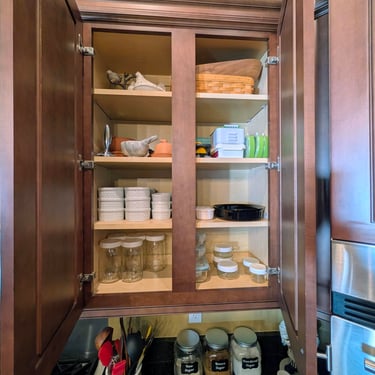
Being sustainably conscious, we always recommend saving items that can be repurposed within the home. In this kitchen, we featured the client’s Apilco serving pieces in the open glass‑front cabinet and repurposed one of several glass containers they owned to display their glass swizzle sticks and added corn kernels at the bottom to keep them from clinking together. We found an unused white ceramic tray shaped like a painter’s palette to corral the salt, pepper, and olive wood sea salt container, and an unused wire basket in their pantry for the onions to be placed across the kitchen, keeping them away from the fruits on the bar top and root vegetables on a cart in the pantry. I had purchased glass containers with bamboo lids and tight seals to decant their tea and coffee grounds but needed to add handles to make them easier to open. The client had knobs they changed on a side table, giving us the opportunity to use those knobs for the lids.
Note:
Products and Sources Utilized in this Project are below.
Products and Sources Utilized in this Project:
1. HomeGoods: Acrylic organizer trays with olive green silicone bases for the contents of the kitchen drawers, a ceramic container for the decanted utensils, white trays for the oils and vinegars, matching wire baskets for the fruit on the countertop (they already owned another wire basket from HomeGoods we utilized for the onions), glass container with lid (used for their collected wine corks), and pan and platter liners added for fragile items and stacking pans
2. Walmart: Glass jars (small for the sugars and large for cereals and granola), Ball jars (6 small, 6 medium, and 12 large for use as needs dictate - e.g. one small for Chai spices, one large for Lion's Mane Powder in their coffee and tea station used daily - labels added)
3. Ikea: Glass containers with bamboo lids
4. Amazon: Updated hardware for the island
5. Custom Printed Labels: Glass jars and containers (small and large) on items decanted