
Pantry
Pantry Inspiration - Under Stairs
The Need:
Maximize the use of this space in a designated pantry area under the stairs directly across from the kitchen for a family who cooks daily and bakes often. Items were evaluated at the outset to identify redundancies. The space includes both a tall section and a shorter section, shaped by the staircase above, which makes efficient planning essential for this client.
The Solution:
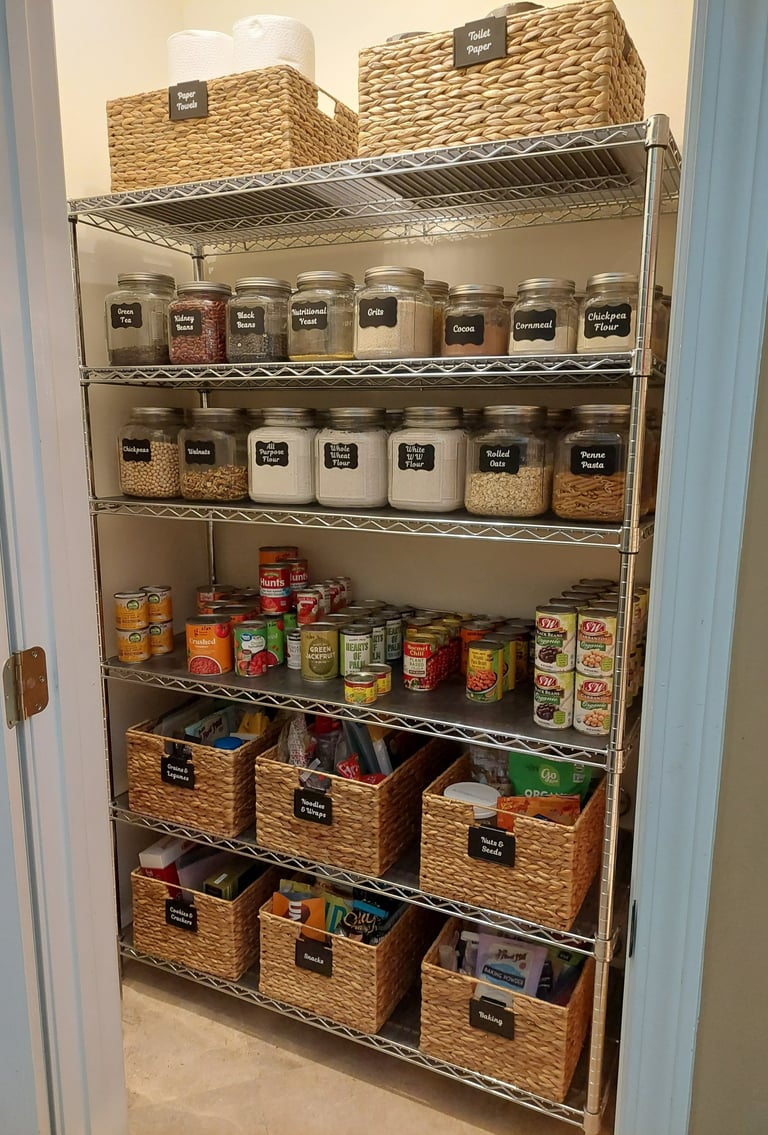
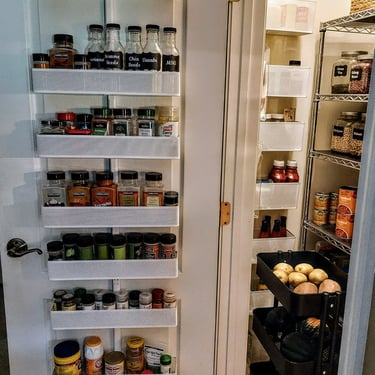
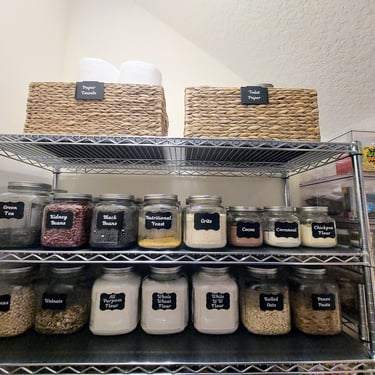
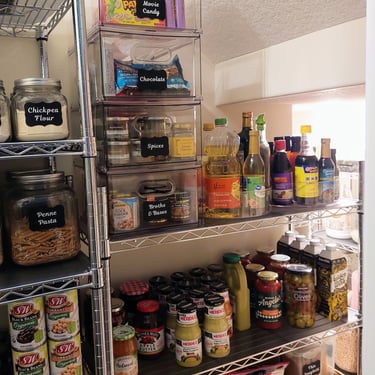
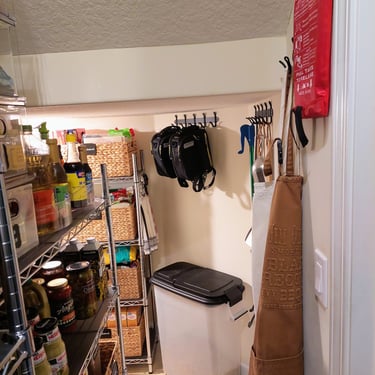
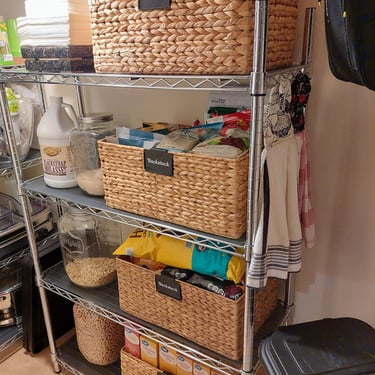
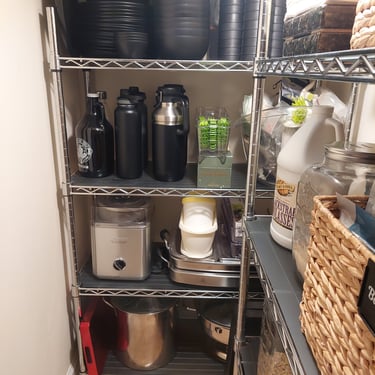
All items were evaluated, duplicates donated, and expired food discarded. Items were decanted into appropriately sized and labeled glass jars, acrylic drawers, and baskets, with the remaining inventory grouped by frequency of use and category. Cans were stacked for space efficiency, bottles were grouped together, and bulk spices were stored in door bins for quick access. All available wall space was utilized. Hooks were added for aprons, grilling tools, and lunch bags, and a scoop was hung near the large‑capacity clear rolling dog‑food container on the floor.
We focused on using the front two‑thirds of the pantry with its ample height and door access for daily‑use items, while reserving the back section with reduced height for the remaining one‑third of the space to store lesser‑used items and backstock. Shelving, wall storage, and door storage were added to maximize both function and accessibility.
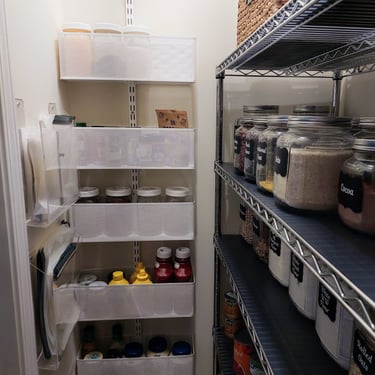
Acrylic turntables were added for oils and sauces, and acrylic wall bins were used to store reusable silicone bags, eliminating the need to waste use of a kitchen drawer. Additional acrylic drawers were incorporated for items used less frequently. All products were carefully measured to maximize space, flow, and function.
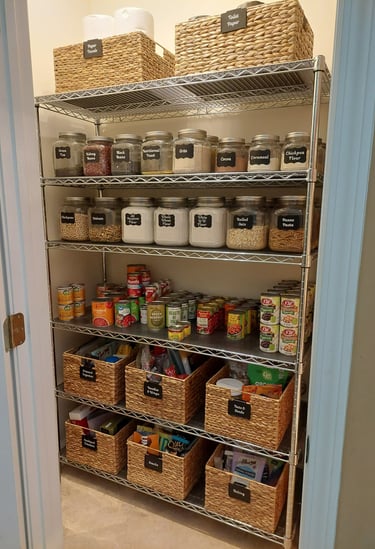
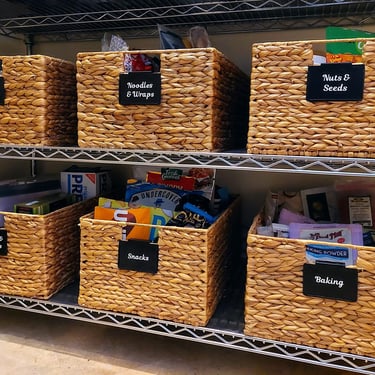
Baskets with labels were grouped by similarly packaged items including Noodles & Wraps, Nuts & Seeds, Baking, Snacks, and Cookies & Crackers. Decanted items such as Rolled Oats, Whole Wheat Flour, All‑Purpose Flour, Walnuts, Pasta, and Chickpeas were placed in clear glass jars to make inventory levels easy to monitor. Backstock baskets and containers were also labeled for bulk purchases, especially helpful for large families and emergency preparedness.
Backstock was placed in baskets at the rear of the pantry, and supplies used less often for gatherings and special occasions were stored on lower shelves beneath the staircase, such as warming platters and party supplies.
A charcoal-colored vented rolling cart was added for vegetables such as potatoes, sweet potatoes, and squashes, allowing it to be wheeled into the kitchen as needed. Ethylene‑sensitive produce like onions, apples, bananas, and citrus were placed in open wire baskets at opposite ends of the kitchen to protect both the cart items and one another from off‑gassing.
Reuse and Upcycling of Materials:
Being sustainably conscious, we always recommend saving items that can be repurposed within the home. In this pantry, the client saved glass bottles from sauces they regularly purchase. During a maintenance visit, we sanitized the bottles and filled them with frequently used herbs and spices, adding labels for each. The client has collected eleven bottles so far, and five were repurposed and placed in a bin on their door system.
Note:
Products and Sources Utilized in this Project are below.
Products and Sources Utilized in this Project:
1. The Container Store: Water hyacinth baskets, black label clips, acrylic drawers by The Home Edit, and Elfa white door and wall storage system
2. Walmart: Glass jars by Anchor (three sizes – small, medium and large)
3. HomeGoods: Extra-large glass jars for bulk items and acrylic turntables
4. Ikea: Black metal hook racks and charcoal-colored vented rolling cart
5. Costco: Large industrial wire shelving unit (one)
6. Amazon: Smaller wire shelving units (three), wire shelving liners for large unit and smaller units, acrylic wall-mounted containers (two - for silicone storage bags), and large‑capacity clear rolling dog‑food container
7. Custom Printed Labels: Client baskets, glass jars, bottles, and acrylic drawers